Cold-weather riding: what wind chill really does on a motorcycle

Late fall in Canada. The thermometer in the garage reads 0 °C, the sun is out, and one last ride before the bike goes into storage sounds like a fine idea. A few kilometres down the highway, you figure out the thermometer lied. It doesn’t feel like 0 °C. It feels like -11. That’s wind chill, and on a motorcycle you make your own just by riding.
Here’s how it works: your body keeps a thin layer of warm air around your skin. Wind strips it away, and the faster you go, the more heat it carries off.
The numbers
We ran the figures through Environment and Climate Change Canada’s official formula, using the bike’s speed as the wind speed:
| Air temperature | 50 km/h | 80 km/h | 100 km/h | 120 km/h |
|---|---|---|---|---|
| 0 °C | -8 | -10 | -11 | -11 |
| -5 °C | -15 | -17 | -18 | -19 |
| -10 °C | -22 | -24 | -25 | -26 |
Two things stand out. First, most of the drop comes early: at 0 °C, it already feels like -8 at 50 km/h. Going faster after that still cools you down, just a lot less. Second, these numbers go easy on you. The formula starts from wind measured 10 metres above the ground and assumes it’s weaker at face height. On a bike, the full speed hits your helmet, so you’ll feel a bit colder than the chart says.
A fair warning about the chart: Environment Canada’s official table stops at 60 km/h, and the department doesn’t report wind chill above freezing, since there’s no frostbite risk. Our values at 80, 100 and 120 km/h use the same formula, extended.
Hands go first
Gloves worn out? Racer 1927 gloves are 20% off with a free code when you sign up for our newsletter.
This isn’t only about comfort. Cold hands get clumsy: braking, working the clutch, hitting the turn signal all get slower and less precise. Health Canada lists shivering and numb hands among the first signs of hypothermia, and they tend to show up while you’re still telling yourself you’re fine.
For frostbite, the Government of Quebec’s benchmarks are straightforward. From -10 to -27 wind chill, the risk is low; it’s uncomfortable. From -28 down, exposed skin can freeze in 10 to 30 minutes, faster in strong wind. On a motorcycle, -28 comes quicker than you’d think: -12 °C at 100 km/h gets you there. Ears, nose, cheeks, fingers and toes are hit first.
Block the wind before you add bulk
The instinct is to pile on layers. But it’s the wind that steals the heat, so a windproof shell over your gear beats a thick sweater that lets air through. Moisture makes it worse, whether it’s rain or sweat, so stay dry underneath and block the air on top. For your extremities:
- handlebar muffs or heated grips;
- heated gloves or proper winter gloves;
- a snug neck gaiter (leave the long scarf at home);
- waterproof boots and good socks.
As for me, I’ve been riding with a heated jacket wired to the bike’s 12 V system since 2014. When the temperature drops, that’s the piece of gear that changes everything.
And it’s not just a November thing. In May or September, mornings can be cold on the north shore of Lake Superior, through the Rockies or along the Cabot Trail, even when the afternoon turns mild. On those days, keep an extra layer in the saddlebags and stop for a hot coffee more often than you would in July.
What about December?
Rules depend on the province, and Quebec’s is the one that catches riders off guard. From December 1 to March 15 inclusive, every motorized road vehicle registered in Quebec needs winter tires, motorcycles and mopeds included. The only motorcycle exception is one used as an emergency vehicle. Fines run from $200 to $300 plus costs. Some manufacturers do make winter or studded tires for motorcycles, but they’re still risky and no real solution for the road; feel free to do your own research. For most of us, the season ends there. Even with winter tires, the SAAQ advises against riding when it’s snowing or the road is icy. Elsewhere in Canada, check your province’s rules before heading out.
If you’re still riding these days, block the wind, keep an eye on your hands, and tell me on Facebook how cold is too cold for you. Ride safe!
Already thinking about next season? Our checklist helps make sure nothing gets left behind.
Illustration
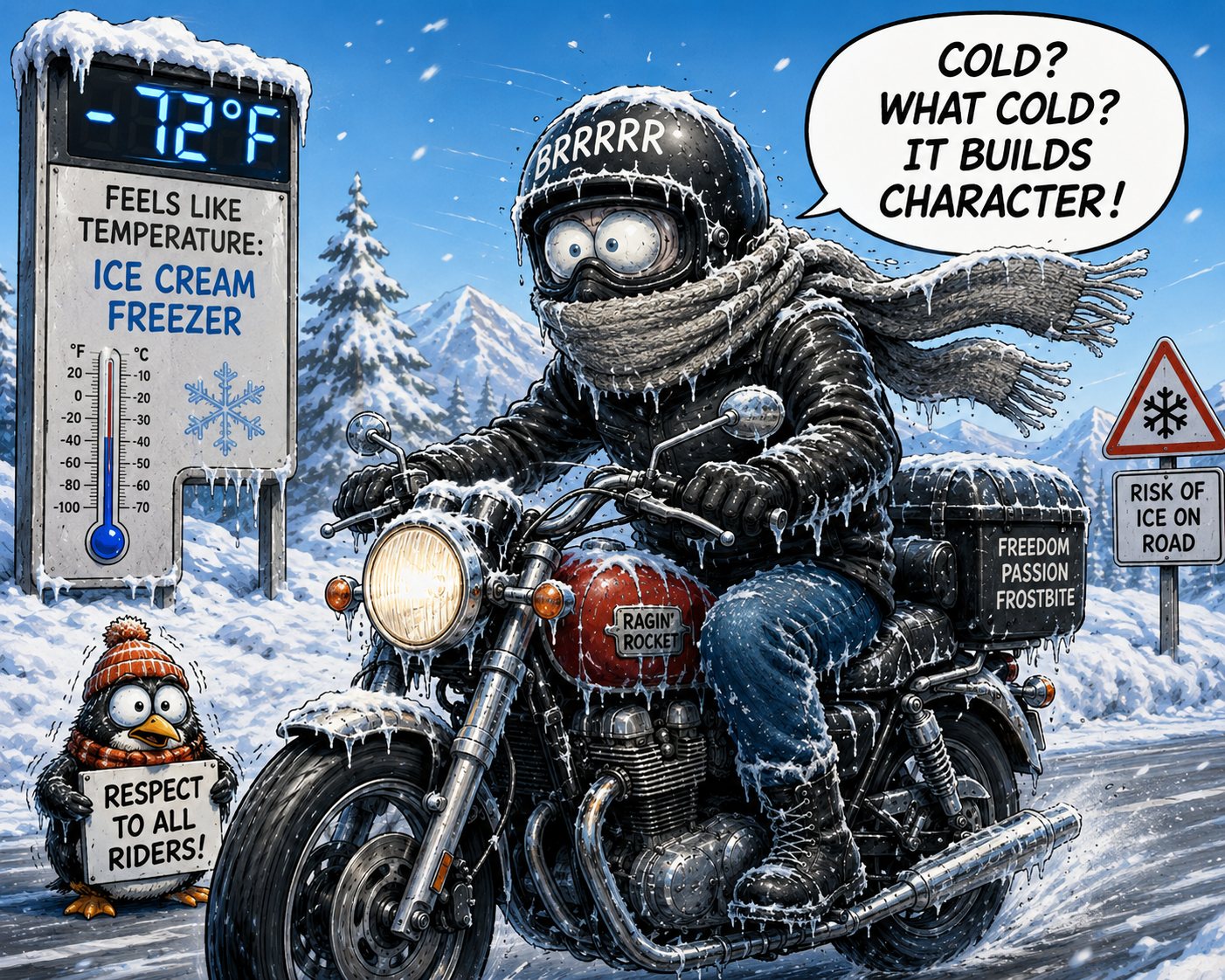
Main illustration: AI-generated caricature. The -72 °F is exaggerated on purpose, and no, we don’t ride on snow or wear a flapping scarf.
Sources
- Environment and Climate Change Canada, Wind chill and the Wind Chill Index
- Government of Quebec, Frostbite
- Health Canada, Extreme cold
- SAAQ, Motorcycles: weather and road conditions
- Government of Quebec, Requirements for winter tires