Ural: the story of the sidecar born in war

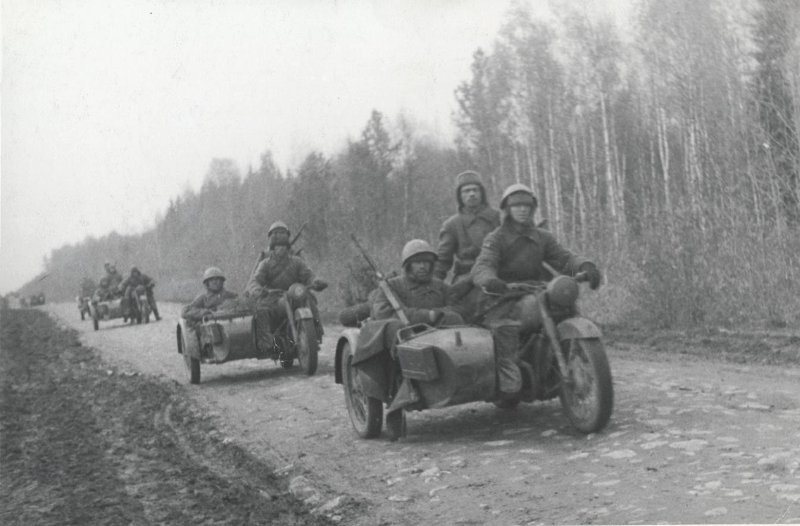
A Ural sidecar never goes unnoticed. It looks like it rolled straight out of a war movie, it has a driven wheel on the sidecar and it even has reverse! Behind that look is a real survival story: a factory moved in a hurry in 1941, the fall of the USSR, sanctions, then U.S. tariffs. Here it is.
At a glance
- Origin: a copy of the BMW R71; M-72 production started in August 1941.
- Factory: Irbit, in Russia’s Ural Mountains, since 1941. Assembly also in Petropavl, Kazakhstan, since 2022.
- Classic model: the Gear Up, 749 cc, 41 hp, two-wheel drive. Production for export markets on pause since November 2025.
- New: the Ural Neo 500, delivered to U.S. dealers since September 2026. Not yet certified for Canada.
A motorcycle born in war
It’s 1941. The Red Army needs a tough motorcycle for bad roads. The Soviets secretly buy five BMW R71s through Sweden, take them apart and copy them piece by piece. The M-72 goes into production in August 1941.
Two months later, the German army is closing in on Moscow. On October 21, the decision is made to move the factory east to Irbit, at the foot of the Urals, into a former brewery. The first batch leaves for the front on February 25, 1942. During the war, 9,799 M-72s are delivered to the troops.
A Soviet giant
After the war, the Irbit factory (IMZ) grows fast. At its peak it has nearly 10,000 workers and builds around 130,000 motorcycles a year. In the USSR, a sidecar rig was often the family car! Exports begin in 1953. In the United Kingdom, Urals are sold under the Cossack name, and they reach the United States in 1994. According to Ural, the factory has built more than three million motorcycles since it opened.
The fall, then the buyout
The end of the USSR nearly killed the brand. The factory is privatized in November 1992 and loses its market. In 1998 it builds fewer than 2,000 motorcycles. Not even a chopper, the Wolf, can save it. In October 2000, everything stops.
In December, three managers, including Ilya Khait (now Ural’s president), buy the factory. Two-thirds of the staff are cut, only the sidecars are kept, and the focus shifts to exports. Production restarts in spring 2001. In 2002, U.S. distribution is brought together under Irbit Motorworks of America.
The Gear Up, a well-mannered old lady
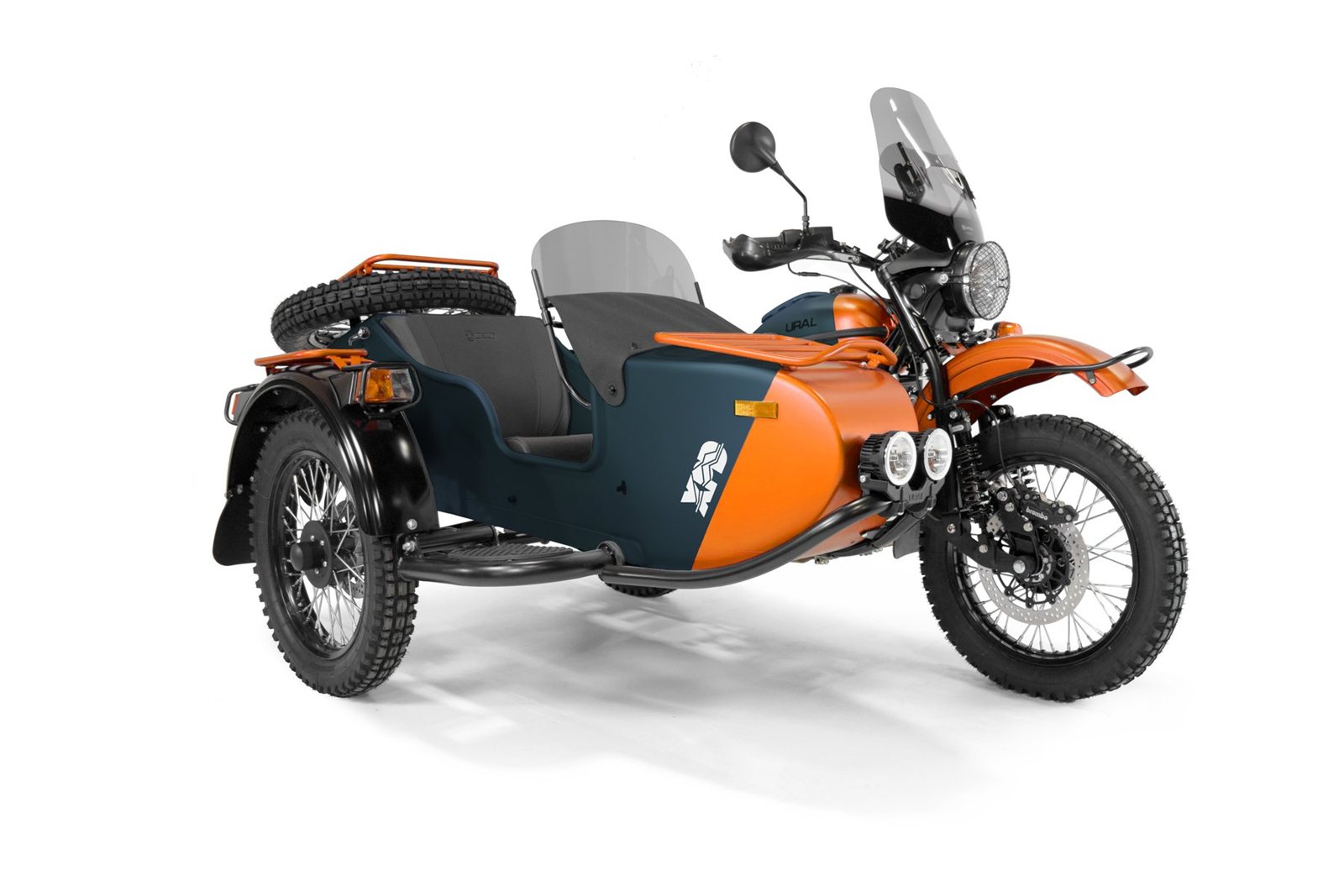
The modern Ural is the Gear Up: a 749 cc air-cooled boxer twin, fuel-injected since 2014, making 41 hp and 42 lb-ft of torque. Four speeds, reverse, shaft drive. Best of all, the sidecar wheel can be driven: engage two-wheel drive and you get through where a regular bike gets stuck. Brembo brakes, Sachs shocks, Heidenau tires. It kept its character, but it stops a lot better than in 1941!
There are four trims. Ural’s website lists U.S. prices (MSRP, before taxes and freight). I converted them to Canadian dollars:
- Base: about $27,800 CAD (US$19,999)
- Standard: about $30,580 CAD (US$21,999)
- Sahara: about $33,080 CAD (US$23,799)
- Expedition: about $37,530 CAD (US$26,999)
Keep in mind these are conversions, not Canadian dealer prices. Ural doesn’t publish prices in Canadian dollars.
2022: war, again
With the invasion of Ukraine, everything changes. Ural condemns the invasion, and production stops in March 2022 because of sanctions. The company opens an assembly plant in Petropavl, Kazakhstan, about 600 km from Irbit, and assembly begins there in August 2022.
It wasn’t enough. On November 18, 2025, Ilya Khait published a letter: Ural is pausing production of its classic models for export markets. Working between two countries, one under sanctions and the other with almost no infrastructure, was too complicated. By late 2024, the company was losing money on every bike. Then the U.S. tariffs of April 2025 made selling in the United States nearly impossible. A pause isn’t the end: the Irbit factory still runs with a smaller team, assembles a few bikes for Russia and makes spare parts for export.
The Neo 500, plan B
To keep the brand alive, Ural developed the Neo 500 with Yingang, a family-owned Chinese company. It’s a lighter, more modern sidecar rig: a 446 cc liquid-cooled parallel twin, 33.5 hp, five speeds and reverse. The U.S. price is US$13,999, or about $19,460 CAD. Ilya Khait is clear: the Neo doesn’t replace the legendary 2WD.
The letter expected first deliveries in late May 2026. In the end, the first batch of 26 bikes reached U.S. dealers in September 2026. What about Canada? Ural says it has started the work to certify the Neo here, but there’s no Canadian date or price yet. Some new Gear Ups may still be sitting at Canadian dealers.
My take
A brand that survived a world war, the fall of an empire and sanctions deserves respect. Riding a Ural isn’t about going fast: it’s about going anywhere, winter or summer, with everyone waving at you. I just hope the Neo makes it across the border.
What about you? Have you ever ridden a sidecar rig? Ural or not, tell me in the comments!
Ride safe!
Photos
Main photo: a column of Soviet sidecar motorcyclists during the defence of Moscow, 1941. The original description doesn’t name the motorcycle model. Photo: Leonid Velikzhanin, public domain, via Wikimedia Commons.
2023 Ural Gear Up Expedition: JMDetroit, CC BY-SA 4.0, via Wikimedia Commons.
Sources
- Ural Motorcycles, “The Company” (official history).
- Ural Motorcycles, “Legacy Production Update and Ural’s Path Forward”, letter from Ilya Khait, November 18, 2025.
- Ural Motorcycles, “Compare Models” (U.S. MSRP) and Base spec sheet.
- Ural Neo, “US Dealer Deliveries Have Begun!”, September 24, 2026, and spec sheet.
- RevZilla Common Tread, “2026 Ural Neo Sidecar First Ride Review” (price and engine).
- Wikipedia, “IMZ-Ural”.